

Human Resource
3 months ago

TAX PLANNING

Your tax bill is not something that happens to you in April. It is the result of decisions made — or not made — throughout the year. If no one at your accounting firm has called you with a strategy since you signed on, you are getting tax preparation. SG Inc CPA is built differently. We plan first, file second, and stay engaged all year.
Led by Shweta Garg, CPA, CTC — one of a select group of CPAs in the country holding the Certified Tax Coach designation.
Serving business owners and practice owners in DFW, Texas and the Bay Area, California. Remote clients welcome.
Most CPAs are excellent at what they do: they record what happened, file an accurate return, and move on to the next client. That is tax preparation. It is backward-looking, compliance-driven, and entirely necessary.
Tax planning is different. It is forward-looking, strategy-driven, and changes what you owe before the year closes. A tax plan does not just report your liability — it systematically reduces it.
For a medical practice owner generating $1M or more, or a business owner with complex personal and business income, the gap between a compliance-only CPA and a tax-planning CPA can easily reach five figures per year. Often more.
Tax preparation (what most CPAs offer)
Tax planning (what SG Inc CPA delivers)
Tax planning is not a single conversation in March. It is a year-round system with eight components that work together. Each one reduces what you owe — or protects you from what you did not expect.

We run updated projections throughout the year — not just in April — so you can make decisions with current numbers, not year-old ones.

Your entity type (LLC, S-corp, C-corp, partnership) has a direct impact on what you owe. We review and adjust structure so it serves the plan, not the other way around.

Most CPAs treat your business return and your personal return as two separate jobs. We treat them as one financial picture, because the opportunities live in that connection.

Section 179 expensing, bonus depreciation, qualified business income deductions, home office, vehicle use, retirement contributions — identified before the year closes, not after.

How you pay yourself — salary, distributions, loans — affects your self-employment tax, Medicare tax, and QBI eligibility. We structure it to your advantage.

Solo 401(k), SEP-IRA, defined benefit plan — the right vehicle depends on your income, entity type, and goals. We identify which structure reduces your current-year liability the most.

We calculate and adjust your quarterly estimated payments throughout the year so you are not underpaying (and facing penalties) or overpaying (and giving the IRS an interest-free loan).

If you own multiple entities, properties, or investment accounts alongside your practice, we coordinate the tax picture across all of them — not just the loudest one.
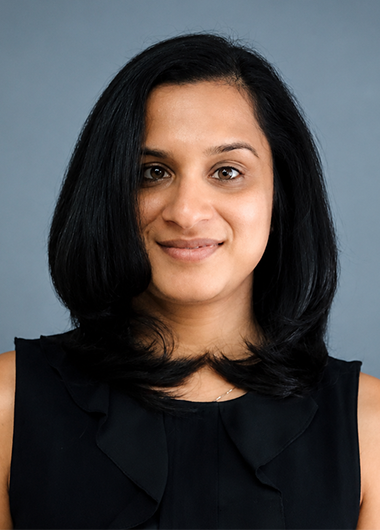
Shweta Garg, CPA, CTC, is Founding Partner and Tax Advisor at SG Inc CPA. She works with medical practice owners, real estate investors, and multi-entity business owners, as well as entrepreneurs and tech startup founders across the SF Bay Area and Silicon Valley. She spent four years as a financial auditor at PwC and Deloitte & Touche USA, LLP, auditing technology, media, venture capital, and legal firms. As a Certified Tax Coach, she builds tax positions before the year closes, not after.
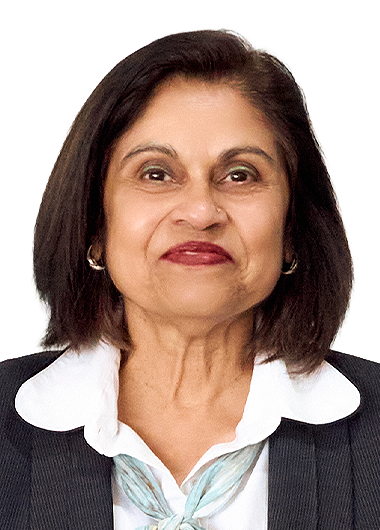
Sheila Khan, CPA, is a Texas-licensed Certified Public Accountant with more than 30 years of finance and accounting experience across the U.S., UK, U.A.E., and India, gained inside both multinational corporations and public accounting firms. At SG Inc CPA she works with clients whose finances cross borders: business owners with foreign income, investors holding entities or property overseas, and families with assets in more than one country. Her forensic accounting background also makes her the person who untangles books that have gone unreconciled for years, which is often the work that has to happen before any tax planning is possible.
Tax planning delivers the most value to clients who have real financial complexity — enough income, enough moving parts, and enough at stake to make year-round strategy worth far more than it costs.
Clinic owners, specialist practices, labs, and multi-location medical operators in DFW and the Bay Area. The combination of high personal income, complex entity structures, significant equipment spend, and payroll complexity makes proactive planning especially valuable. Section 179, owner compensation structure, retirement plan contributions, and practice overhead all interact in ways a compliance-only CPA will not proactively address.
Strong fit: single or multi-location practice with revenue of $500K+, any owner carrying W-2 income alongside practice distributions, practices considering expansion or equipment purchase.
Investors and operators with properties, LLCs, and other entities running alongside their primary business. Cost segregation, depreciation planning, entity structure across the portfolio, and the interaction between passive income and active income all require coordinated planning — not separate filings.
Strong fit: clients with 3+ entities or properties, clients preparing for financing or refinancing, clients who have never had a unified tax view across all their holdings.
Business owners generating $500K or more annually who have outgrown generic small-business tax service. Owner compensation, QBI optimisation, retirement account funding, and multi-year planning are the levers that make the most difference at this income level — and they require someone who is watching them proactively.
Strong fit: owner-operators in professional services, growing businesses where compensation structure has never been reviewed, clients with both business and significant personal investment income.
Qualified Small Business Stock is one of the largest tax benefits available to a business owner. Under Section 1202, a shareholder who sells qualifying stock in a C-corporation can exclude a substantial share of the gain from federal tax, and in many cases all of it. For a founder selling a company, that is often the largest number on the closing statement.
Every requirement is set years before the sale, and most cannot be fixed later. A company organised as an LLC, a share buyback at the wrong moment, or a sale a few months short of the holding period can each remove the benefit entirely. By the time a letter of intent arrives, the answer is already decided. We review eligibility at formation, at every financing, and whenever ownership or structure changes.
What has to be true
Why it gets missed
Health services are excluded by statute, so a clinical practice held in a C-corporation generally does not qualify. If you also hold a separate operating company, a device or software venture, or equity in a non-clinical business, that stock may qualify on its own terms. We look at each entity separately

In almost every case we review, the benefit was not lost to a complicated rule. It was lost to an ordinary business decision made without the tax question attached: a conversion that came too late, a buyback nobody timed, a closing date nobody checked. That is what year-round planning is for. If you hold or expect to hold stock in a C-corporation, QSBS should be reviewed now rather than during a transaction. Founders of technology companies should also see our Tech Entrepreneurs and Startups page.
The outcomes are financial. But the day-to-day experience of working with a tax-planning CPA is also different. You get proactive calls instead of reactive scrambles. You get projections instead of surprises. And you get one connected view of your financial picture — not a pile of separate filings.
The planning fee question: Tax planning is an investment, not a cost. If the strategies we identify do not reduce your tax liability by more than our annual fee, we are not the right fit. We will tell you that honestly in the initial review — before you commit to anything.
We assess your current setup — returns, entity structure, compensation, and personal income — and identify exactly where money is being left on the table.

We build a year-round plan specific to your practice or business: deductions, entity adjustments, retirement vehicles, estimated payments, and a projection of what changes.

We coordinate the changes — entity filings, retirement account setup, compensation structure, quarterly payment schedule — so the plan is not just documented but executed.
Quarterly check-ins. Proactive calls when tax law changes or a relevant opportunity arises. Year-end planning before the window closes. This is not an annual engagement — it runs all year.
We assess your current setup — returns, entity structure, compensation, and personal income — and identify exactly where money is being left on the table.
We build a year-round plan specific to your practice or business: deductions, entity adjustments, retirement vehicles, estimated payments, and a projection of what changes.
We coordinate the changes — entity filings, retirement account setup, compensation structure, quarterly payment schedule — so the plan is not just documented but executed.
Quarterly check-ins. Proactive calls when tax law changes or a relevant opportunity arises. Year-end planning before the window closes. This is not an annual engagement — it runs all year.

A confidential 30-minute review will show you specifically where your current setup may be costing you — and what changes when you have a plan.
3 months ago
Great and friendly staff

6 months ago
The payroll staff are Awesome!

6 months ago
SG INC did an excellent job handling our payroll process. Their team was professional, accurate, and always responsive. They made everything simple and stress-free for our company. Highly recommended...

8 months ago
Best CPA in dfw. Asim is a best guy with lot of good information and VERY HELPFUL .

8 months ago
Sandeep was very helpful. Nice staff

9 months ago

9 months ago
Looks to be a good clean and well maintained office with courteous staff.

11 months ago
Very professional and extremely helpful.

1 year ago
Samiksha is very professional for tax returns

1 year ago
This looks like a good team, had a quick call with reception lady and then the manager Surbhi and she guided me quite well. I’m pretty new to running business, and she gave me a few tips right away even when I actually told her I didn’t need their services and just wanted to check if your firm was a good fit for me. I would be coming back once my business is more set up.
Tax preparation looks backward. It takes the year that has already happened and files an accurate return. Tax planning looks forward. It identifies strategies, structural changes, and decisions that reduce what you owe before the year closes. Every CPA can do preparation. Very few do planning. SG Inc CPA was built around planning — it is why the Certified Tax Coach credential matters here.
Ideally, before the year you want to change. Most of the most impactful strategies — entity elections, retirement account contributions, owner compensation structure, equipment purchase timing — require decisions to be made during the tax year, not after it. If you are reading this mid-year, there is still time to make a meaningful difference. If you are reading this in January, the full year is ahead of you. Either way, the best time to start is now.
A standard CPA is trained in accounting and tax compliance — recording, filing, and reporting accurately. A Certified Tax Coach (CTC) has additional, specialised training in proactive tax reduction strategies: entity optimisation, compensation structure, retirement planning, and the techniques that change a client’s tax liability before it is set. The CTC designation is held by a small percentage of CPAs and requires ongoing continuing education in planning specifically. Shweta Garg, CPA, CTC leads SG Inc CPA’s tax planning work.
It depends on your income, entity structure, how you are currently compensated, and what has and has not been done in prior years. In our experience, clients who come from compliance-only CPAs — especially practice owners and business owners above $500K — consistently find five-figure annual savings once a full plan is in place. The initial review is designed to show you a realistic estimate specific to your situation before you commit to anything.
Yes — and coordinating the two is one of the most valuable things we do. When business income and personal income are managed separately, the connection between them is missed. Owner compensation structure, S-corp distributions, retirement contributions, QBI deductions — all of these live at the intersection of business and personal. We manage both sides as one plan.
No. The most common situation we see is a client who has been with their current CPA for years — the work is accurate, the relationship is comfortable, but no one has ever called them with a strategy. The initial review is structured to identify the gaps in your current setup, not to criticise your existing CPA. If the planning math works in your favour, we can manage a clean transition and pick up mid-year without disruption.
Yes. We have offices in Plano, TX and Milpitas, CA, but tax planning and advisory work does not require in-person meetings to be effective. If your situation has the right level of complexity, location is not a barrier.
A complete guide to the tax planning strategies most relevant to medical practice owners — entity structure, Section 179, retirement plans, and more.
Understand the difference between backward-looking compliance and forward-looking strategy — and why it matters to your bottom line.
A confidential review costs nothing and carries no obligation. We will look at your current setup and tell you honestly where the opportunities are — and whether we are the right fit to help you capture them.
Your submission was successful.